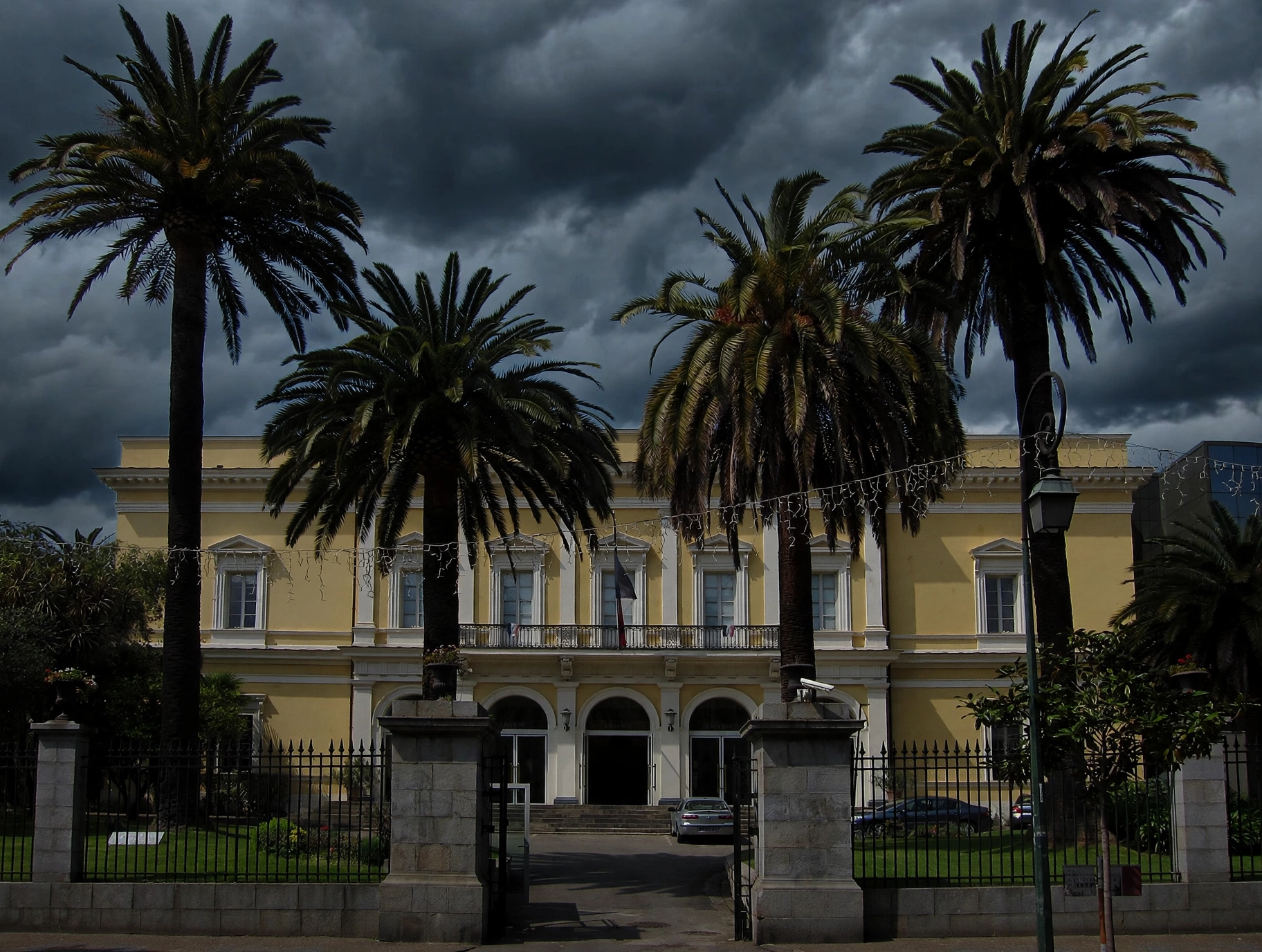
Far from the widespread perception of an island surviving on state handouts, certified public finance records tell an entirely different story: each year, the central government collects approximately 1.45 billion euros from the island (VAT, fuel taxes, income tax) while returning approximately 1.03 billion in local transfers and direct administrative services. Based on financial modeling conducted by L’OCHJU cross-referencing corporate tax data, municipal budget matrices, and Senate reports, Corsica generates an estimated net surplus of 420 million euros annually benefiting the national budget, equivalent to roughly 1,200 € per resident per year for the island’s 355,000 population.
1. THE REAL FINANCIAL BALANCE : WHAT CORSICA SENDS TO PARIS
For decades, an unyielding political narrative has been repeated to the Corsican public: « You cost more than you contribute, you live on mainland subsidies. »
This argument fosters an unjustified sense of dependency. Yet when examining the actual balance of cash flows—comparing everything residents in Corsica pay on daily purchases (VAT, fuel taxes, income and commercial taxes) against what the state actually reinvests on the island—who is truly funding whom?
To move past political posturing and examine concrete numbers, L’OCHJU’s investigation desk analyzed certified public records: municipal budgets across all 360 island communes, sectoral corporate tax filings, and parliamentary budget inquiries.
💡 What this means in practice: Based on our cash-flow analysis, a family of 4 living in Corsica contributes on average €4,800 annually in taxes that flow into central coffers without returning in the form of local public services or infrastructure investments. Corsica contributes fully—and beyond its proportional share—to national fiscal solidarity.
2. THE CHECKOUT SLEIGHT OF HAND : CORPORATE TAXATION SHIFTED TO PARIS
How does the French state conceal this massive financial extraction? Through a legal accounting loophole: headquarters tax centralization.
Every time you buy groceries at a supermarket in Ajaccio, Bastia, Furiani, or Porto-Vecchio, pay your mobile phone subscription, or fill your car with petrol, you pay a profit margin to corporate conglomerates.
These corporations (retail monopolies, energy providers, telecom operators, private banks) generate over 2.45 billion euros in annual revenue in Corsica.
Yet when paying the Corporate Income Tax (IS at 25%) on profits generated directly from your money:
- Store checkout computers do not file local tax returns in Corsica.
- Every tax filing is centralized at corporate headquarters in Paris, Nanterre, or Hauts-de-Seine.
💡 The Key Metric : 185 Million Euros in Corporate Income Tax generated on Corsican soil is reported, collected, and retained directly in the Parisian region every single year.
| Island Economic Sector | Annual Revenue in Corsica | Corporate Headquarters Location | Estimated Tax Shift from Corsica |
|---|---|---|---|
| Retail Supermarkets & Distribution | > 1.40 Billion € / year | Paris / Hauts-de-Seine | ~ 105 Million € / year |
| Fuels & Energy Monopolies | > 450 Million € / year | Courbevoie / Nanterre | ~ 35 Million € / year |
| Telecommunications & Tech | > 280 Million € / year | Paris / Saint-Denis | ~ 22 Million € / year |
| Banking & Insurance Conglomerates | > 320 Million € / year | Paris (Central HQs) | ~ 23 Million € / year |
| TOTAL DELOCALIZED CASH FLOW | > 2.45 BILLION EUROS | Centralized in Paris Region | ~185 M€ IN DELOCALIZED TAXES / YEAR |
On Treasury dashboards in Bercy, this wealth appears as having been generated in the Paris metropolitan region. Meanwhile, Corsica, stripped of the statistical trace of these earnings generated on its own soil, is often inaccurately labeled as “unprofitable”.
🏦 HOUSEHOLD SAVINGS : €7.3 BILLION IN DEPOSITS MANAGED OUTSIDE THE ISLAND
Analysis of official statistics from the Banque de France (Stat Info — regional deposits and credits) reveals a second disconnect: households and businesses in Corsica hold approximately €11.8 billion in bank deposits and savings (checking accounts, savings books, life insurance).
- Less than 40% of these deposits are reinjected locally as residential mortgages or commercial loans to local businesses and trades.
- The remaining surplus (over €7 billion in island liquidity) is centralized by corporate treasury desks of major national banking networks and the Caisse des Dépôts, supporting broader national debt and liquidity rather than directly financing Corsican projects.
🥃 SPIRITS EXCISE TAXATION : A SHORTFALL FOR THE TERRITORIAL COLLECTIVITY
Under Article L. 4425-1 of the General Code of Local Authorities (CGCT), revenues from excise duties on alcohol consumed in Corsica are legally earmarked for the budget of the Collectivité de Corse (CdC).
However, supply logistics routed through mainland logistics hubs in the Provence-Alpes-Côte d’Azur region generate substantial fiscal leakages: when customs clearances and duties are settled at mainland warehouses without explicit attribution to the island destination, revenues bypass the regional budget, representing an estimated annual shortfall of several tens of millions of euros.
🎰 GAMBLING AND E-COMMERCE RECEIPTS
Lottery purchases, gaming stakes, and online commerce transactions made from Corsica generate direct and indirect tax receipts collected into the national Treasury without dedicated territorial redistribution mechanisms for local infrastructure maintenance.
3. TOURISM VAT AND SEASONAL OVERLOAD : THE COST OF THE SUMMER RUSH
The second major seasonal financial flow occurs every summer.
Between June and September, over 3 million visitors and passengers travel to Corsica. Regional highways experience intense traffic, hospital emergency services operate at peak capacity, and drinking water and wastewater treatment facilities face significant operational stress.
This seasonal activity generates substantial tax revenue: approximately €945 million annually in VAT and fuel excise duties (TICPE) collected directly across the island.
| Nature of Consumption Tax | Amount Collected in Corsica | National Budget Allocation |
|---|---|---|
| VAT Collected on Consumption | ~€680 Million / year | Directed to National General Budget |
| TICPE (Fuel Excise Duties) | ~€145 Million / year | National Budget (no specific local road rebate) |
| Specific Levies on Tobacco & Alcohol | ~€120 Million / year | Public Treasury |
| TOTAL CONSUMPTION REVENUES | ~€945 MILLION / YEAR | Specific seasonal wear compensation: €0 |
The underlying budgetary challenge lies here: general operating grants allocated to island municipalities (the DGF) are computed on the baseline of the 355,000 year-round residents. Consequently, extra costs for road upkeep, refuse management, and water purification generated by seasonal tourism are primarily supported by local budgets and residential property taxpayers.
4. PUBLIC TRANSIT CONTINUITY : THE 2009 GRANT FREEZE DOCUMENTED BY THE SENATE
To support essential maritime and air connections between Corsica and the mainland, the central government allocates a Territorial Continuity Grant (DCT) fixed at €187 million per year.
This allocation is not a privilege: it fulfills the statutory obligation under Article L. 4425-26 of the CGCT to ensure equal geographic access for island residents to the national territory.
However, this allocation has experienced a structural financial freeze:
- The Grant Freeze Since 2009 : As formally highlighted by the French Senate Information Report No. 488 (2022-2023), on page 38, the €187M continuity grant « has not been subject to any mechanical or statutory adjustment since the 2009 budget act ».
- Cumulative Inflation Deficit : Over 17 years, while cumulative inflation and marine fuel expenses have surged, maintaining the grant at a nominal flat rate has generated a substantial erosion of purchasing power for public transport services, evaluated at more than €600 million in cumulative deficits.
- Burden Transferred to Local Budgets : To prevent service curtailment or sharp passenger tariff hikes, the Collectivité de Corse was compelled to draw upon its own capital budgets, reducing available funding for other regional priorities such as school renovations, regional roads, and energy transition projects.
📊 CONSOLIDATED BUDGET BALANCE : WHO IS FINANCING WHOM?
Cross-referencing municipal balance sheets, sectoral economic metrics, and parliamentary reports yields the following breakdown of estimated fiscal flows between Corsica and the central state:
| Estimated Fiscal Indicator | Observed Annual Amount | Source & Methodology |
|---|---|---|
| Direct & Indirect Tax Revenues Collected in Corsica | ~€1.45 Billion | DGFiP / Customs (VAT, fuel taxes, income tax, excises) |
| Actual Public Expenditure & Grants Reinjected Locally | ~€1.03 Billion | Budget Acts / DGF / Continuity Grant / Deconcentrated services |
| NET SURPLUS GENERATED FOR NATIONAL BUDGET | + ~€420 MILLION / YEAR | L’OCHJU Modeling (net transfer balance) |
| ESTIMATED ORDER OF MAGNITUDE (355,000 RESIDENTS) | ~€1,200 / RESIDENT / YEAR | Roughly €4,800 for a four-person household |
📌 L’OCHJU Methodological Note : The estimated +€420M net balance represents an overall macroeconomic model. It balances total public revenues generated by actual economic activity in Corsica (including VAT paid by residents and 3 million seasonal tourists, fuel duties, and the estimated local share of corporate profits generated in Corsica by major retail and energy firms whose tax filings are centralized in Paris) against all central government budget disbursements on the island (operating grants, the €187M transport continuity grant, and sovereign services). This balance demonstrates that across its real economic perimeter, Corsica delivers a substantial net fiscal surplus to the national budget.
5. BALANCED FISCAL GOVERNANCE & SOVEREIGN MODERNIZATION
The accounting reality is straightforward: Corsica is a net contributor generating significant financial surplus for the national community.
How can these flows be adjusted to support local purchasing power and modernize insular infrastructure? L’OCHJU outlines practical fiscal and statutory solutions:
- Territorial Attribution of Corporate Taxes : Allocating corporate income tax from retail hypermarkets and fuel distributors based on local economic activity (utilizing ÉSANE / NAF 47.11F metrics) to fund local economic resilience and public transport.
- Fair Sharing of Summer Tourism VAT : Ring-fencing a dedicated share of summer tourism VAT to finance road maintenance, waste management, and regional hospital infrastructure, similar to successful European island autonomous regions.
- Statutory Revaluation of Transport Continuity : Indexing the €187M envelope frozen since 2009 to reflect genuine transport inflation, in full accordance with Article L. 4425-26 of the CGCT.
- The Constitutional Precedent of Article 74 : Highlighting that under Article 74 of the French Constitution, territories like Saint-Barthélemy and French Polynesia exercise their own autonomous fiscal jurisdiction validated by the Constitutional Council, demonstrating that localized tax governance is fully compatible with republican frameworks.
- Local Reinvestment of Household Savings : Creating insular banking mechanisms to ensure a greater proportion of Corsican household deposits (~€7.3 billion) is directly invested in low-interest mortgages and agricultural modernization.
Verdict of the L’OCHJU Desk : The perception of Corsica as an economically assisted territory does not withstand scrutiny. With roughly €1.45 billion collected annually versus €1.03 billion reinjected in state spending, Corsica contributes an estimated net surplus of around €420 million each year to the central budget, representing roughly €1,200 per resident. Fiscal autonomy and localized revenue management are not about division, but about recognizing the genuine economic contribution of the people of Corsica.
🏛️ OFFICIAL INSTITUTIONAL & PRESS TRANSMISSION DOSSIERS (ICIJ GRADE)
To ensure full forensic traceability, judicial follow-up, and public awareness, the investigative desk provides official downloadable transmission packages:
- 📰 Press & Media Investigation Briefing Kit : forensic summary of cash flows, corporate tax flight, and key fiscal metrics.
- ⚖️ Official Judicial Notice (Article 40 CPP / National Financial Prosecutor) : inventory of 4 sealed pieces of evidence under ISO/IEC 27037 standards (Senate reports & Bank of France data).
- 🏛️ Parliamentary & Institutional Policy Brief : draft bill on corporate tax territorialization, territorial continuity fund catch-up, and written question template for Parliament.
L'OCHJU is the gaze that will no longer turn away.
— L'OCHJU Financial Investigation Desk